Many more that involve time and some other concept: paleolithic, oscillatory, periodic, ancestor, descendant, son, breakfast (all-day breakfast!), teatime.....
Note (very important for later) we already have the idea that things change with time ; e.g.
but not just words: grammar.
In Latin we learned 6 tenses:
from Verbix
Present
Amo, Amas, amat
I love, you (s) love, he she or it loves
Past
amavi
I loved
Future
amabo
I will love
Imperfect
amabam
I used to love/I was loving
Pluperfect
amaveram
I had loved
Future perfect
amavero
I will have loved
Note that this is grossly simplified: these are Indicative active tenses
We also have Subjunctive active (amem ⇔ May I love)
Indicative passive (amor ⇔ I am loved)
Subjunctive passive (amer ⇔ May I be loved)
Imperative (ama ⇔ Love! (or else))
These are "moods", but we are really only interested in the temporal aspects
In Latin we learned 6 tenses:
claim in English that we have 10:
Present simple
I speak
Implies ability to do something in the present
Present continuous
I am speaking
Present perfect
I have spoken
No particular time implied
Preterite/Aorist
I spoke
Implies action has ceased
Imperfect
I used to speak
_
Past Continuous
I was speaking
_
Conditional
I would speak
Can refer to past as well as the future (!)
Pluperfect (past perfect)
I had spoken
Implies temporal ordering ("I had spoken before leaving"
Future
I will speak
can imply prediction
Future perfect
I will have spoken
Imples series of action in future
Stolen and adapted from Wikipedia
Note that
not all of these translate into even other Indo-European languages
e.g
"I speak" & "I am speaking" ⇒ "je parle"
"I speak" & "I am speaking" ⇒ "Ich spreche"
but
"I speak" ⇒ "Sto parlando" & "I am speaking" ⇒ "Parlo"
This does not imply that those langauges are incomplete
Also note that other languages have other tenses (again from Wikipedia)
Near future tense: in the near future, soon
Hodiernal future tense: sometime today
Post-hodiernal future tense: sometime after today
Remote future tense: in the more distant future
Predictive future tense: a future tense which expresses a prediction rather than an intention, i.e., "I predict he will lose the election, although I want him to win". As such, it is really more of a mood than a tense. (Its tenseness rather than modality lies in the fact that you can predict the future, but not the past.)
Nonfuture tense: refers to either the present or the past, but does not clearly specify which. Contrasts with future.
Nonpast tense: refers to either the present or the future, but does not clearly specify which. Contrasts with past.
Not-yet tense: has not happened in present or past (nonfuture), but often with the implication that it is expected to happen in the future. (As such, is both a tense and a modality). In English, it is expressed with "not yet", hence its name.
Note many subtleties: e.g prediction
We will overcome (Negro Spiritual)
vs volition
We shall overcome (Peter Seeger's adaptation)
Linguists refer to "aspects" of a verb rather than tenses
Other solutions: (thank you Cho & Marcus Watson)
Chinese; verbs do not have tenses in the European sense, but have modifier words. Tense usually obvious by context
Japanese; no tenses, but concepts conveyed by adverbs
"I speak futurely"
"I speak pastly"
All of this structure depends on an (unspoken) model of time
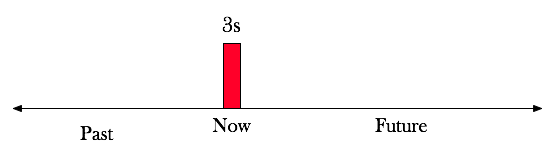
Simplest model of time:
Note 3 s "now" is confirmed by psychology
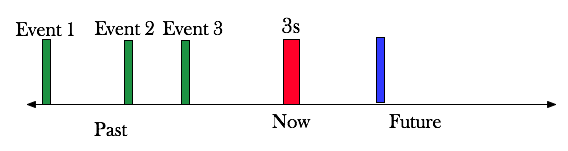
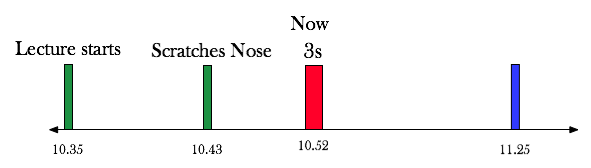
However we tie down past and future with events.
Note "events:" are used in physicist's sense: occur at definite time (t) and place (x,y,z).
The horse-riders "Three-day event" isn't an event!
Was the collapse of the World Trade Centre in 9/11 one event or two? (costs you $3500,000,000 if you have the answer wrong
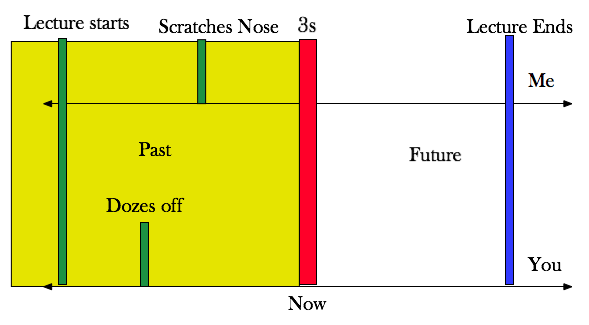
Picture is enhanced in two ways:
Absolute time (rather than relative)
Multiple Frames of reference. Note we agree on common events, past and future
Past is immutable, future is fluid: note this is assumed not just in philosophy and physics, but poetry as well
The Moving Finger writes; and, having writ,
Moves on: nor all thy Piety nor Wit
Shall lure it back to cancel half a Line,
Nor all thy Tears wash out a Word of it. Rubaiyat of Omar Khayyam tr. by Edward FitzGerald
Time past and time present
Are always present in time future. T. S. Eliot Burnt Norton
And the seasons they go round and round
And the painted ponies go up and down
We are captive on the carousel of time
We can't return we can only look behind from where we came
And go round and round and round in the circle game Joni Mitchell The Circle Game
Are there any temporal concepts that we cannot express in English?
The simplest form of English is pidgin: e.g. in Northern Nigeria, just 3 tenses:
Present: I eat bread ≅ I eat bread
Future: I go eat ≅ I will eat the bread
Past: I done eat ≅ I ate the bread
Note this leads to oddities such as "I go come' and "I done come"!
Oral cultures tend to have relative time but not absolute time.
Whorf claimed that the Hopi have no word for "time" or "past, present or future", (apparently true)
and hence had no concept of time (certainly false, since they have a calendar and understand crop planting etc.
The Pirahã:
an extraordinary example: the Pirahã: language has
No words for colour
No words for number
No creation myths
No words for ancestors
Even taught the Portugese words for numbers, "not one of them had learned to count to 10 or even to add 1 and 1" New Scientist, March 18th 2006
Some concepts they use do not exist in English: e.g xibipiio ≅ "appear" and "disappear".
and apparently no concept of time in the Western sense.
see Daniel Everett, "Don't Sleep, There are Snakes"
Final thoughts
More advanced the language, more sophisticated the description of time.
Can we argue that language developed to explain our relationship with time?
Are there time-related concepts that we cannot describe in English?
Yes: will show examples later on
In physics, we need to describe concepts which don't map well on to the English language, and don't necessarily have translations. e.g. "mass" and "weight" are almost synonymous in English and many languages have the same word. They also carry cultural baggage. Further, we have concepts which have no correct mapping e.g. "electron".
Maths represents a (more-or-less) culture-free way of describing concepts. Also it allows predictions in a quantitive way.
No human investigation can be called real science if it cannot be demonstrated mathematically Leonardo da Vinci
When did time become important?
e.g Circadian Rhythms: = the ability of an organism to regulate its biological activities
according to the 24 hour cycle of night and day
Work, eat, play, mate
Sleep, play, mate
Many biological processes require a coordinated sequence of events
These events are repeated with a well defined period
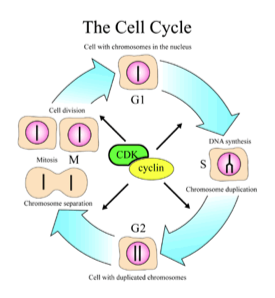
Cell Cycle: :
Periodic processes are driven by periodic (oscillating) signals
Circadian rhythms are controlled by biochemical networks whose activity
oscillates with roughly a 24 hour period
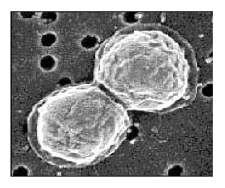
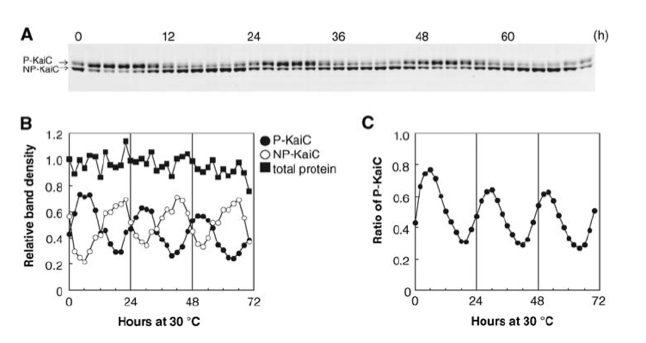
Even bacteria need to keep time: e.g CyanoBacteria
Eldon Emberley, SFU, finds 3 proteins give an oscillatory system
Measurment of Time
Year: interval between midsummer days
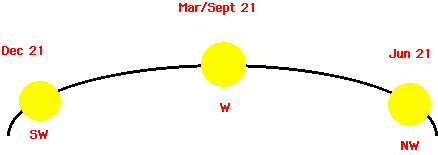
Position of Sunrise and Sunset varies throughout the year
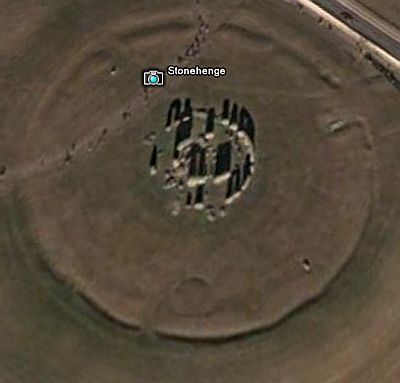
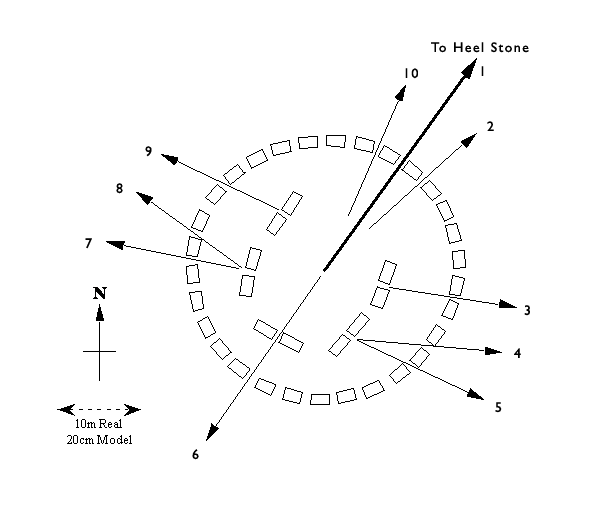
Midsummer day: when the sun rises/sets in most northerly position. Measured at Stonehenge: important do define seasons and hence time to plant crops Probably 2000 BC ± 1000.
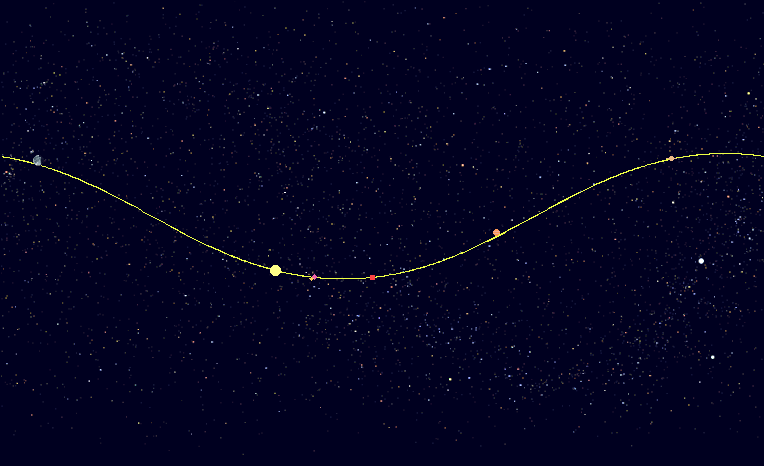
Position of the noon sun in the sky varies throughout the year:
It moves against the fixed stars because
the earth orbits the sun
the earths axis is tilted
it also moves in the sky at a given time of day: (i.e. the time of noon varies) because the earth moves at varying speeds in its orbit, so we actually need a better clock than the sun to measure this
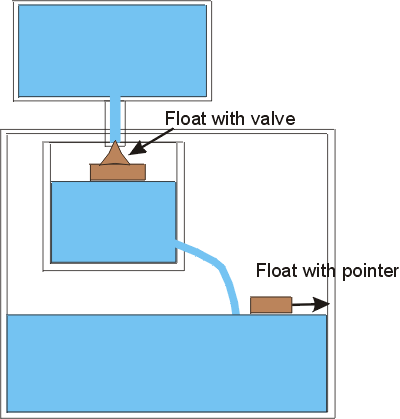
First non-astronomical clock is water-clock
Water in a containter drains out throuigh small hole: problme is that the flow is non-uniform. Hence keep container full with valve: clepsydra (= "water thief"
www.mlahanas.de/ Greeks/Clocks.htm
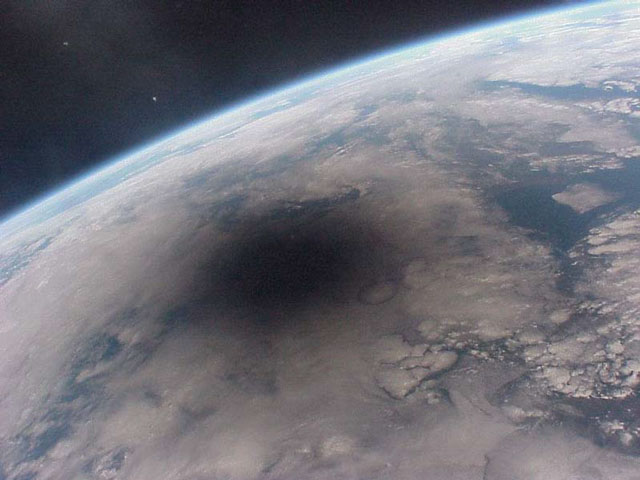
Eclipses
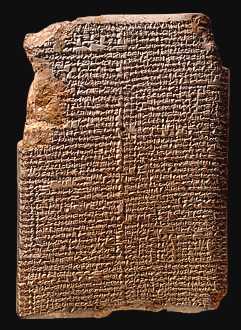
Tablet with a list of eclipses between 518 BC and 465 BC, mentioning the death of king Xerxes.
British Museum, London
Why do these matter?
CALPURNIA: When beggars die, there are no comets seen;
The heavens themselves blaze forth the death of princes.
Julius Caesar
Chinese astronomers Hi and Ho executed for failing to predict eclipse in 2136BC or 2159BC.
See Eclipse Quotations at http://www.mreclipse.com/Special/quotes1.html.
Saros:
Eclipses repeat after 18 years and 11.3 days.
The .3 days shifts the eclipse about 110º degrees west.
Also some saros sequences start at the south and drift North, others at the North and drift South.
This means that the cycle is very complex: can only see it after many years.
Earth's rotation has slowed down, by 1/100 sec/century, because of tidal effects! i.e. earth isn't a very good time-keeper
Babylonian Astronomy?
What was wrong with Babylonian Astronomy?
They had no model (but they were very good at arithmetic!)
e.g. the month:
Kidinnu arrived at 29.530594 days, which is only 0.432 seconds more than the modern estimate of 29.530589 days.
Hipparchus: 160-127 BC.
Precession of the Equinoxes
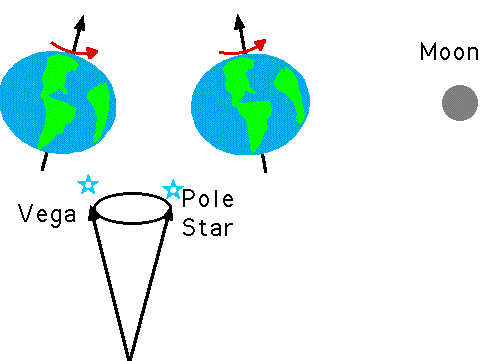
Earth's axis is tilted, but doesn't always point to the same place (i.e. the North Star isn't always!)
March 21st & Sept 21st are special days: Sun is on the equator (now), but where on the equator? In 2000 BC
Aries 2000 BC
Pisces 100 BC (which is why the Christians chose the fish as their symbol)
And now This is the dawning of the age of Aquarius
Except it isn't!
How does precession happen
The most baffling example of ang momentum conservation is a spinning top/gyroscope
Watch the demo.
Precession occurs when a top is has an external torque acting on it. Paradoxicallly, the precession speed is greater the slower the top is spinning
This same precession happens on a totally different scale. Since the Earth is not perfectly spherical, the Moon exerts a torque on the equatorial bulge, => Precession,
Period = 26000 yrs: Now N pole points towards Pole star, 13000 yrs will point at Vega
Also this gives saros cycle: plane of Moon's orbit precesses once every 18 years
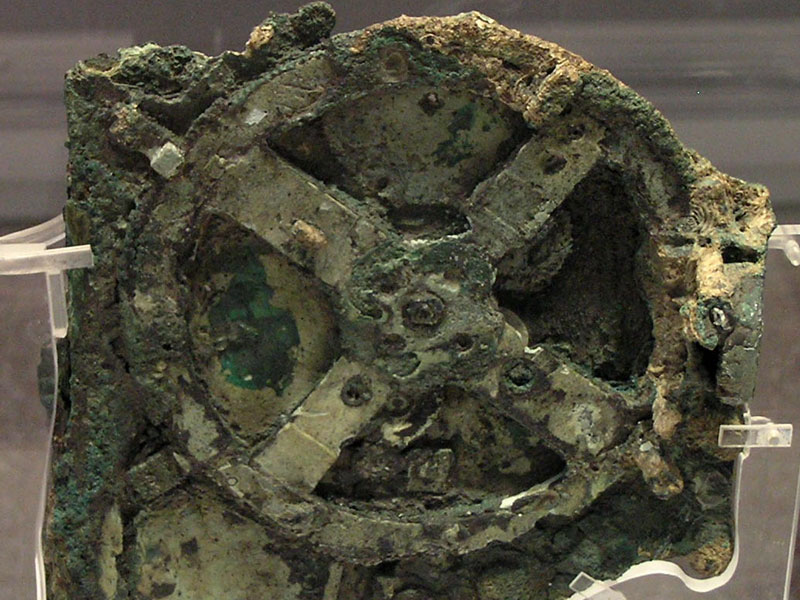
Antikythera Mechanism
An extraodiinary discovery from 1901: probably from late second century BC
National Archaeological Museum in Athens: wikipedia
X-rays show very complex structure
Appears to be a very sophisticated astronomical computer: includes Hipparchos' discovery of irregularities in Moon's orbit
T. Freeth et al, Nature 444, 587-591 (30 November 2006), wikipedia
The front dial has two concentric scales. The inner scale shows the Greek zodiac with 360 divisions.
The Parapegma is a star almanac showing rising and settings at dawn or evening of particular stars or constellations
Consistent with Egyptian calendar of 365 days, with twelve 30-day months and 5 extra
The effect of the extra quarter day in a year could be corrected by turning the scale one day every four years
The spiral upper back dial displays the luni-solar Metonic sequence of 235 lunar months with a subsidiary dial showing the Callippic cycl
spiral lower back dial displays the 223-lunar-month Saros eclipse cycle with a subsidiary dial showing the Exeligmos cycle.
Pendulum Clock
Invented by Huyghens (1656)
Look at the Foucault pendulum in the entrance to Herzberg building:
Watch the animation.
Period:
\color{red}{
P = 2\pi \sqrt {\frac{L}{g}} }
What should period be for the Foucault pendulum? (L ~ 20 m.)
What would period of a 1 m simple pendulum be?
Accuracy ~ 1 minute/day
Chronometer
Longitude problem: error on longitude typically 100 km (!) in 18th century.
Admiralty offered £20,000 ($10,000,000 today) to solve problem
need to determine time to better than 1 s/day
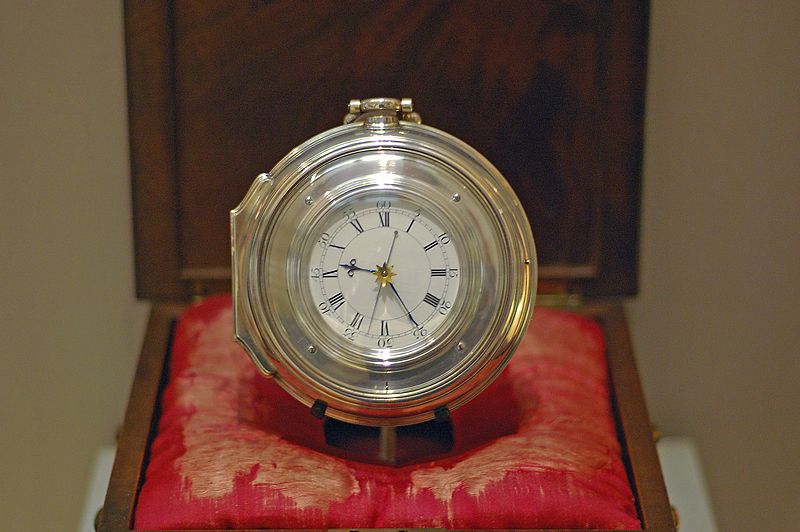
Harrison (1721) constructed chronometer accurate to better than 1/5 s/day
Pulsars
neither earth's orbit or rotation are sufficientlly stable now: best astronomical timekeeper are pulsars, accidentally observed (1968) as pulsars (Jocelyn Bell etc)
Very regular radio pulses,
period of 4 s ⇒ 2 ms
Note that height of pulse is very irregular
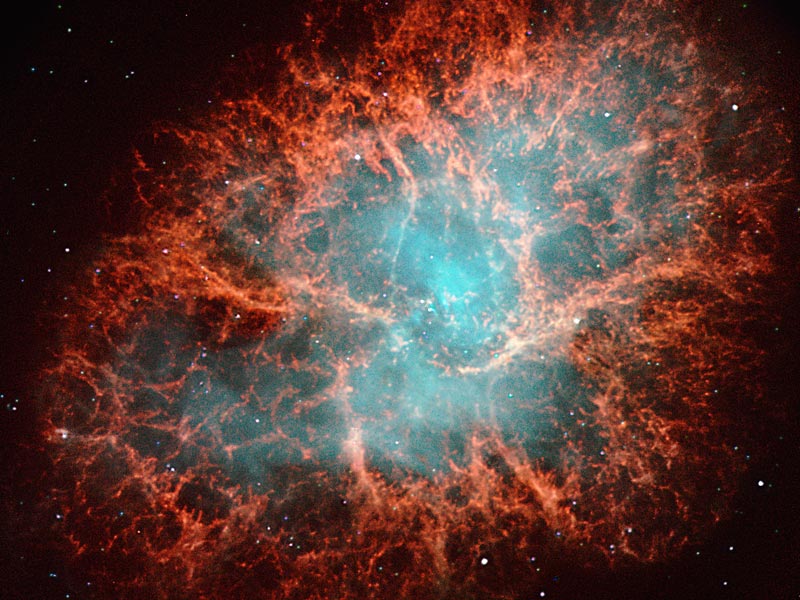
Best known is Crab. Known to be remnant from supernova in 1054 (seen by Chinese)
Pulsar at centre has period of ∼ .03 s
<
Walter Nowotny (U. Wien, Nordic Optical Telescope
And we can listen to them!
Period of Crab measured to be 0.03308471603 s (i.e. stable to 1 part in 109)
Define
Unit
Abbreviation
Defined by
1 metre
1 m
1/40,000,000 th of circumference of the earth
1 second
1 s
1/84,600 th of mean solar day
1 kilogram
1 kg
Mass of lump of platinum in Paris
But............
This leads to more problems: circumference of earth differs at various places,....rotation speed of earth varies...
Need reproducible unit, so any lab can measure it
Define time via the oscillations of a caesium atom 1 s = 9,192,631,770 f
Distance used to be via wavelength of red line from Kr86 light ( 1 m = 1,650,763.73 l)
but now speed of light (c) is much better measured, so 1 m = distance travelled by light in 1/299,792,458 s
Atomic clock
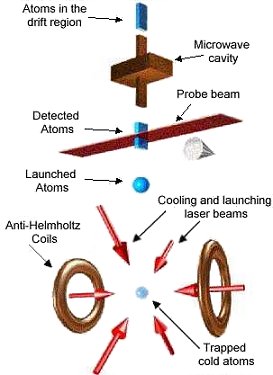
Best is now at NRC: Caesium fountain clock better to 1 part in 1012
i.e. would lose or gain ~ hour over lifetime of universe: so accurate that the only comparison is one Cs clock to another!
Time in Literature
Aristotle demanded the three unities
Unity of Space
Unity of Time
Unity of Action
The first two are, of course, just physics. Almost all writers assumes an underlying 3-D space and time which flows in a linear fashion.
e.g. The prisoner in the "Count of Monte Cristo" cannot escape his three-dimensional cell: trivial to do so in a four-dimensional world it becomes quite like a child playing hop-scotch can step out of a square in two-dimensions.
What stories really satisfy the three unities?
"High Noon"
"Rope" (Hitchcock's retelling of the Leopold-Loeb case).
Simple variants:
compression of time.
Philip Sydney grumbled about this 400 years ago:
Now of time they are much more liberal; for ordinary it is, that two young princes fall in love; after many traverses she is got with child; delivered of a fair boy; he is lost, groweth a man, falleth in love, and is ready to get another child; and all this in two hours' space; which, how absurd it is in sense, even sense may imagine;"Philip Sidney
flashback: the insertion of a little bit of past time into present time. In practice, a character relating what has happened to him in the past is almost the same author dropping the story back into the past. Either way the past is fixed
two or more threads of a story sequentially, this 3-dimensional space and a linear time represent the physics framework of the vast majority of stories.
e.g. "Oliver Twist" starts with a long description making it clear that the space is England and the time Victorian, but the 3 dimensions of the space fail to be mentioned.
Time Travel
Date
Science
Author
Book
~3500000000 BC
First Biological Clock
Cyanobacteria
2000 BC
Day/Year
Stonehenge
1500 BC
First clock
Babylon (?)
1895
Wells
The Time Machine
1905
Time becomes relative
Einstein
1908
Time as 4-th Dimension
Minkowski
1928
Universe with closed time-lines
Godel
1948
Bradbury
Sound of Thunder (altered past)
1940's
Wormholes
Wheeler and others
1956
Heinlein
All you zombies (Ultimate paradox story)
1958 onwards
various
Dr. Who
1969
Vonnegut
Slaughterhouse-Five
1980
Theoretical Example of time-travel machine
Tipler
1999
Scientific American article
Ford/Roman
So how about time travel?
TIME TRAVEL INTO THE PAST
There is no debate, even among science fiction writers,
that this is completely impossible. It not only involves
violations of the laws of physics, particularly the
Second Law of Thermodynamics, but literally and actually
involves gross logical contradictions. The idea is that
mad Dr. Soandso gets into his time machine (not clearly
described) and somehow goes back to ancient Rome, where
he gives a translated handbook of physics and chemistry
to a Roman scholar, and thus utterly changes the course
of human history .... the atomic bomb, for instance, is then
invented by Claudius Festus Arpinna in 350 AD. Despite
the fact that even the writers agree time trips into the
past are an impossibility, they love to play with them,
because of the plot complications that can be generated
by the logical contradictions that arise. My favorite
books of this type are Dinosaur Beach by Keith Laumer and
The End of Eternity by Isaac Asimov. The time-travel
short story to end all time-travel short stories is All
You Zombies! By Robert A. Heinlein. Wells' 19th Century
The Time Machine is the genre's daddy.
 M. C. Escher: Relativity"