Extending the spectrum (needed radar: Jansky radio-telescopes, 1955)
Need to say a little more about the last:
Electromagnetic Spectrum
99.99% of our information about the universe comes as EM radiation
We see the spectrum from red to violet. The colour actually indicates the wavelength of the light (note we have to think about pure spectral colours: i.e. green is not a mixture of yellow and blue!)
But light is part of the whole electromagnetic spectrum: wavelengths we can detect go from .000000000000000001 m to 10000m
We "see" only one octave. Compare to sound, we hear (well, some of us!) 10 octaves (20Hz to 20000 Hz: middle C is at 252 Hz.)
Why do we see so little of the spectrum? Answer lies in the transparency of the atmosphere. THis ignores extra problems like clouds and "twinkle".
Barbecues and Stars
We know from barbecuing that colour of coals tells you how hot they are
Gellert Ament/Istock
Apparent temperature follows optical spectrum : i.e. the hotter the object, the "bluer" its colour
To see further:
Gamma-rays: can use the atmosphere as a detector
HESS Gamma-Ray Telescope
Credit: The HESS Collaboration
X-rays: must get above atmosphere (Einstein, Chandra, XMM satellites)
XMM Launched
Drawing Credit: D. Ducros, XMM Team, ESA
U-V (Ultra-violet) : High observatories (Chile, Mauna Kea)
Optical: High observatories (to avoid twinkle)
The VLT Interferometric Array
Credit & Copyright: European Southern Observatory
I-R (Infra-red) : High observatories (Chile, Mauna Kea)
Radio: Large dishes, many hooked together (Arecibo, VLA)
A Very Large Array of Radio Telescopes
Credit: NRAO, NSF
Hubble
and above all, the Hubble (HST) which sees in the UV and IR and is above everything!
The Orbiting Hubble Space Telscope
Credit: STS-103, STScI, ESA, NASA
These give us 70 octaves!
We've been able to launch several hundred space probes. The ones that matter are the solar system probes (Pioneer, Mariner, Venera, Voyager, Galileo, Cassini, Huyghens...)
Note that the effect of manned (or womanned) exploration has been miniscule (the Moon is a very dull place!)
So what has this brought us?
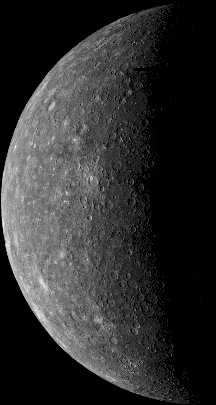
Mercury
The surface of mercury Similar to the moon but
no mountains
many scarps (probably formed by cooling of the planet)
Very hot on sunward side (~500oC)
Very cold on shadowed side (~-200 oC)
No atmosphere
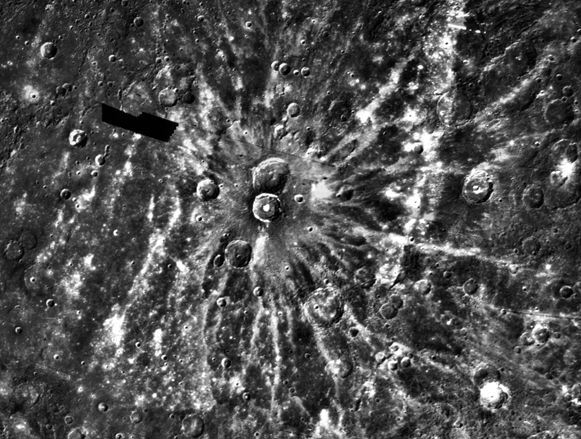
Degas crater
Orbital period of 88 days.
Rotational period ∼ 56 days (Long thought to be ∼ 88 days: In fact, it is 2/3 of the orbital period).
A very dull place: lets move on to
Venus
Popular with writers: e.g C. S Lewis
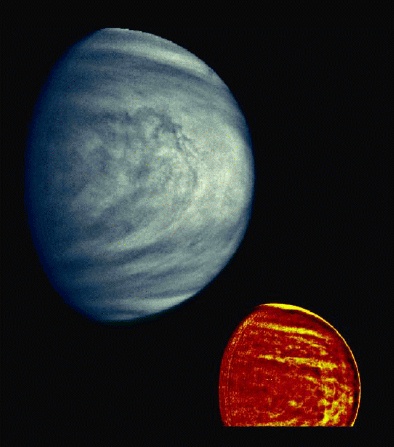
So does it look like this?
Almost featureless in optical. Usual picture is UV (upper) or infrared (lower) and only shows cloudtops.
Venera, pioneer and radar showed surface for first time
Year = 225 days.
Rotation (i.e. 1 venus day = 243 days Retrograde (so sun "rises" in the west: unknown till 1961)
Atmosphere very dense (pressure ∼ 100 × earth at surface). Mainly CO2.
Upper clouds rotate in 4 days (∼360 km hr-1)
At surface, gentle winds, but temperature∼900 °C,
Surface rocks basaltic, appear to be young
from Jim Imamura: http://zebu.uoregon.edu/~imamura/121/lecture-11/lecture-11.html
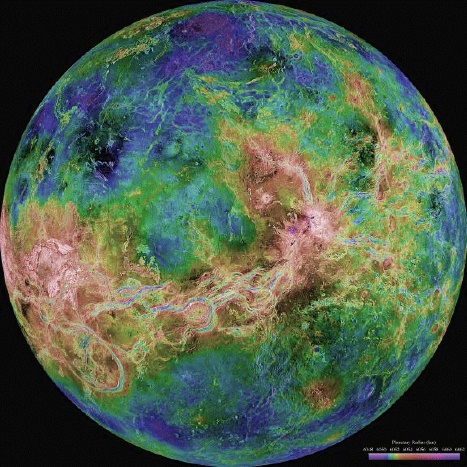
Radar maps show rough terrain as bright
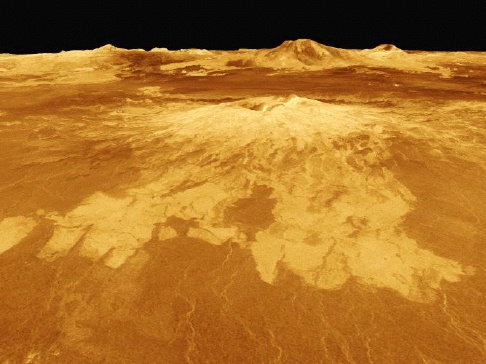
Sapas Mons, a volcano 400 km across and 1.5 km high is on the western edge of Alto Regio. Note the lava flows extend for hundreds of km.
Mars
Very poular with writers: Bradbury did it best ("Sands of Mars")
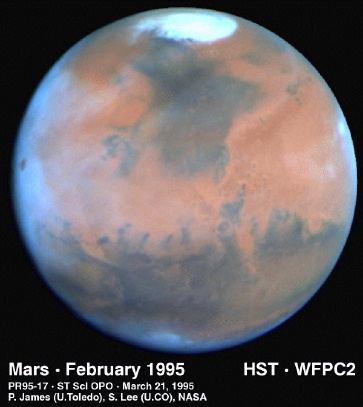
Lowell observed canals
Atmosphere: pressure ∼ 0.005 bar 95% CO2, rest O2, N2, Ar + very little H2O
Temperature range 210 K->310 K
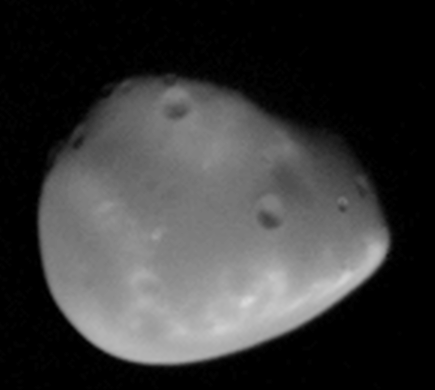
Two small, close, irregularly shaped moons.
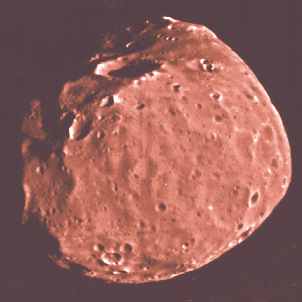
Phobos has very large impact crater.
Deimos Moons are probably captured asteroids.
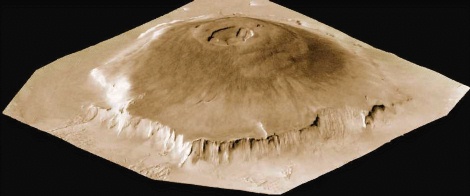
VOLCANOES:
Olympus mons: 25 km high, evidence of lava flows. Much larger than equivalent ones on earth (why?)
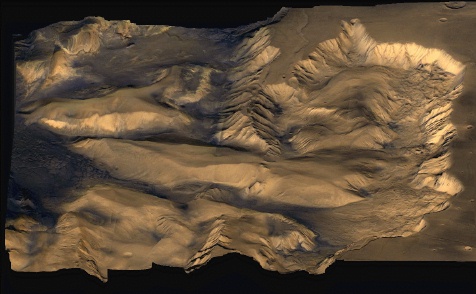
Candor Chasma Massive rift valley.
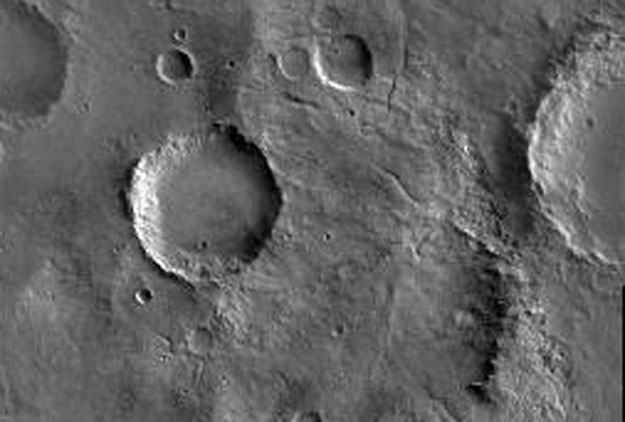
Many craters, at various stages of newness
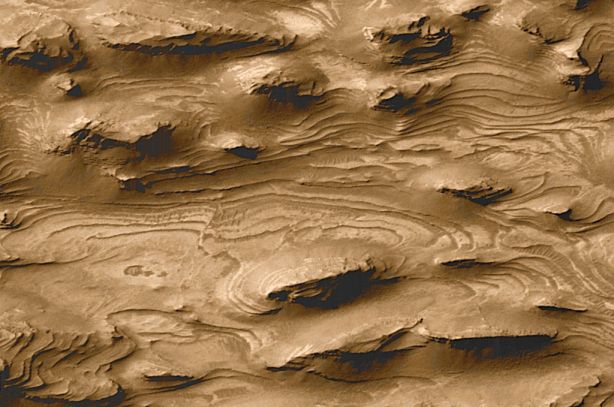
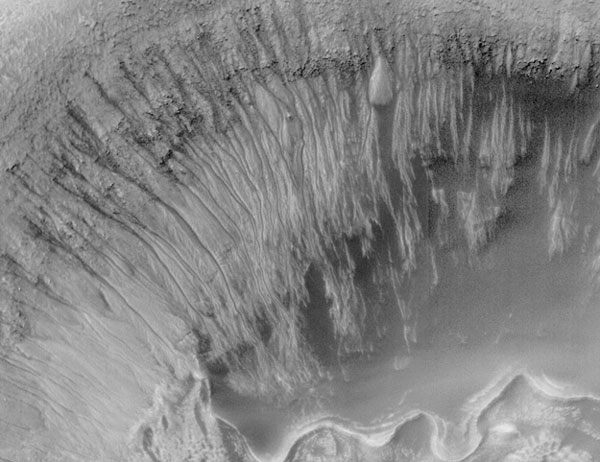
The interesting problem: Does Mars have water? Sometimes it looks just as though it once did
This is the Newton crater
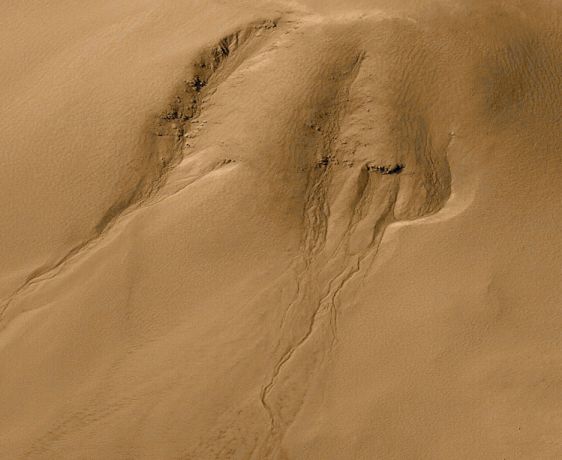
and what really look like arroyos in New Mexico
and "holes":deep caves where water could still exist. SO probably there was a lot of water, coiuld still be some underground
Note the quality of pictures now: Victoria crater. frost is frozen CO2
Hot off the press
Methane: tends to be created by living things (e.g. microbes ....)
NASA
Jupiter
Largest planet by far.
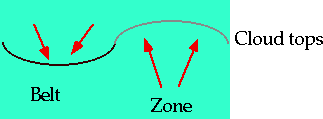
Strongly banded appearance, corresponding to convective regions in atmosphere. Dark areas (bands) lie lower in atmosphere than light areas (zones).
Colours probably due to complex organic molecules: detected so far are:
CH4 (methane),
NH3 (ammonia),
H2 (molecular hydrogen),
C2H2 (acetylene),
C2H5, PH3, H2O, G2H4 (germane), CO, HCN, H2S,
top layer mainly ammonia.
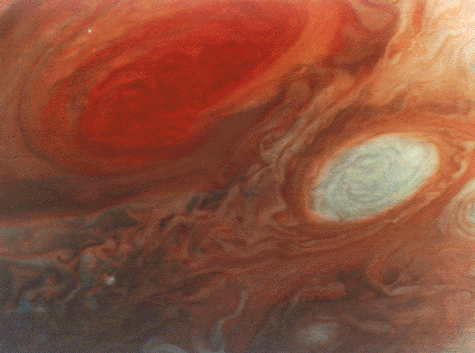
Great Red Spot
: noted since 1600's
∼ 20,000 km × 50,000 km.
Top of spot extends well above surrounding cloud tops. Note downstream eddies.
Colour probably from organic molecules stirred up from below.
Speeds of rotation ∼ 500 km/hr
Now clearly seen to be "hurricane" (lifetime not too surprising: 1000 × bigger than terrestial hurricanes, so lifetime could well be 1000 × longer!)
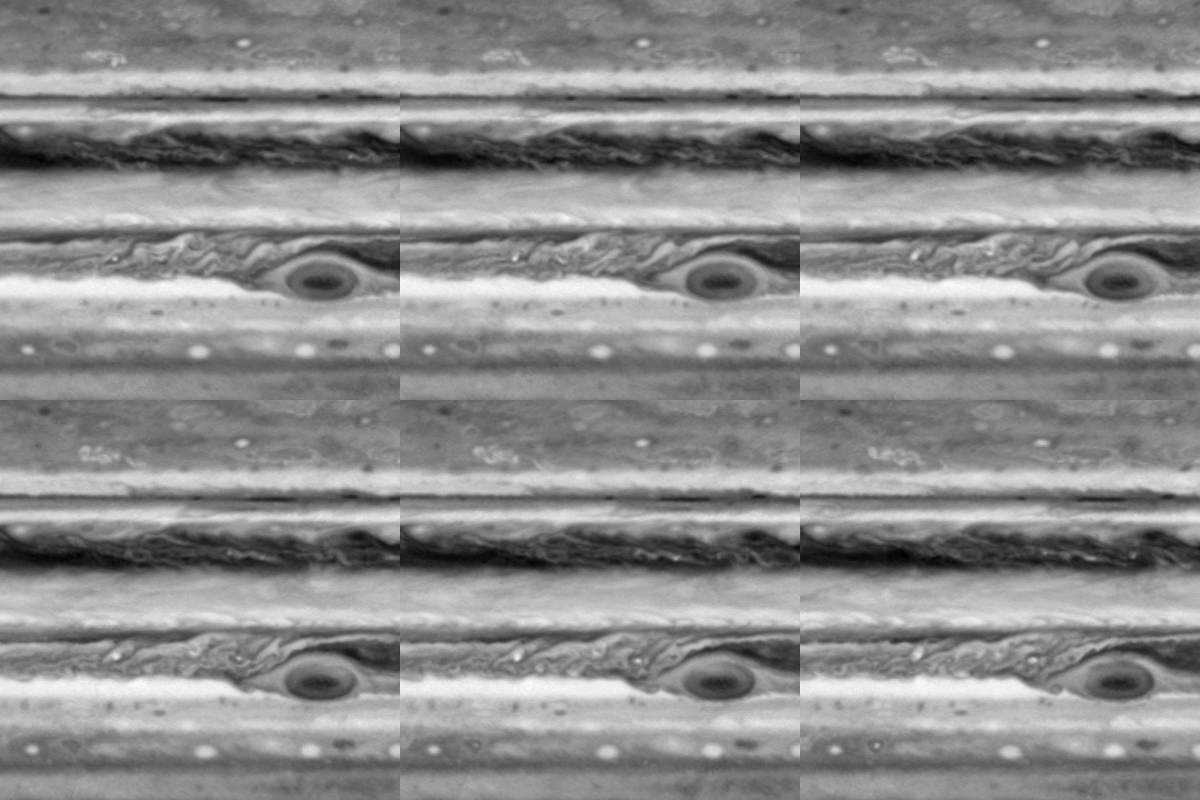
Cassini At Jupiter: Red Spot Movie
Credit: CICLOPS, NASA, JPL, University of Arizona
Moons of Jupiter: Io
Jupiter has some of the oddest moons in the solar system. Four large easily visible with binoculars
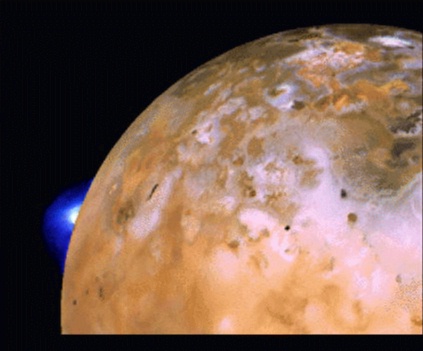
Can watch Io rotating
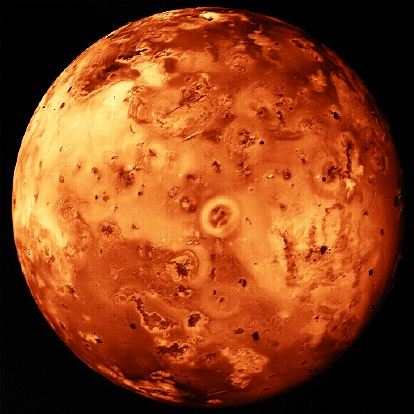
Io is in a state of continuous volcanic eruption: Volcanoes:Plumes to 250 km Vulcanism caused by "tidal pumping" by other moons.
Note surface is very unstable: no craters (age ∼ 106 yrs). "pimple" in centre is volcano seen frolm above
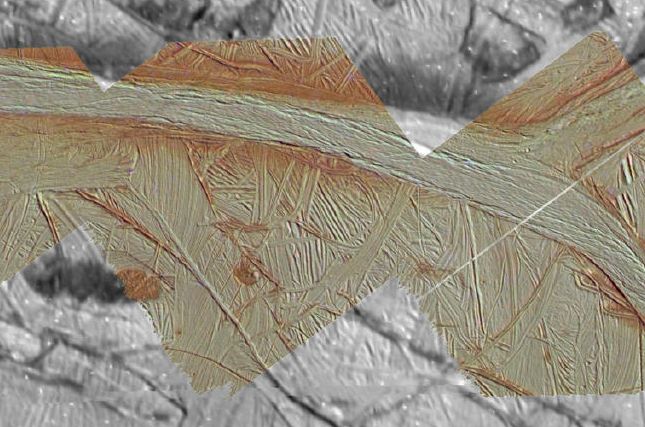
Europa:
Rock covered with ice, probably slushy since no impact craters.
Close-ups show odd crustal structures
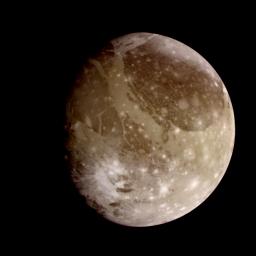
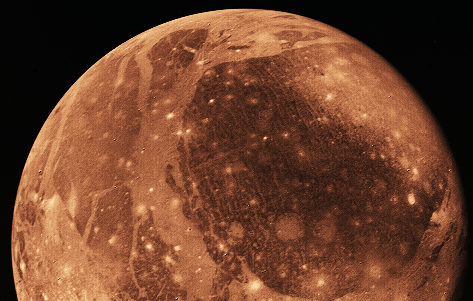
Ganymede
Largest moon in the solar system: Ice on rock. Many craters, but with central pits, not peaks. Huge transverse faults
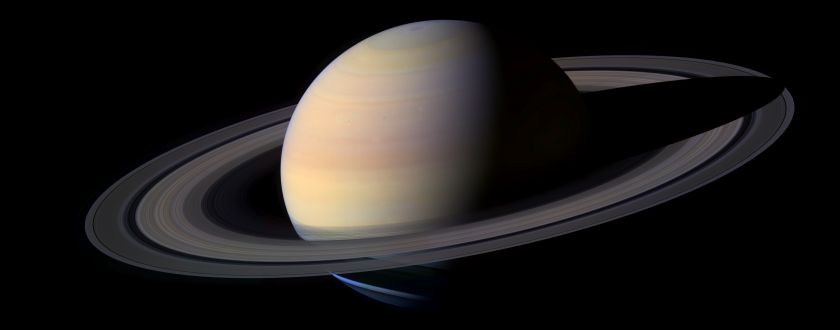
Saturn
Day 10 hr 14 mins.
ATMOSPHERE similar to Jupiter, but less heating (internal &sun) so weather better
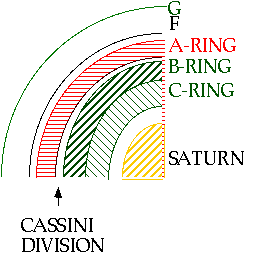
RINGS
First seen by Galileo as "Handles"
Assumed to be solid, but Maxwell showed that tidal forces would have destroyed them...
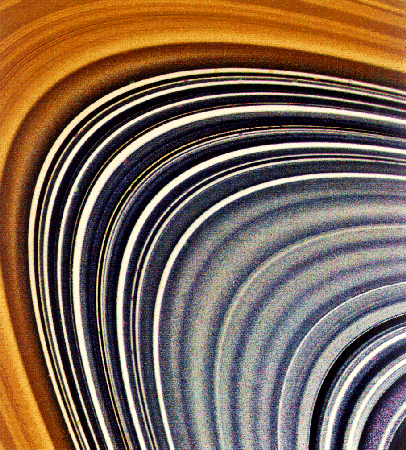
Spectrum consistent with small ice pellets and dust (moonlets).Voyager showed
many thousands of ringlets,
some rings elliptical
F-ring very narrow & braided
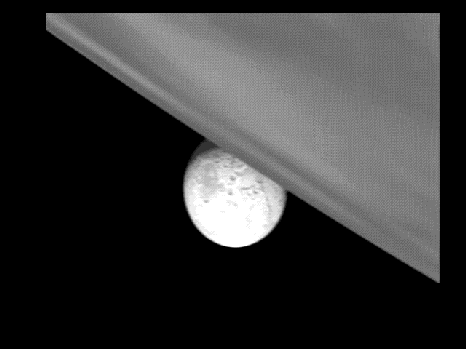
rings very thin (< 2 km) kept from dispersing by "shepherd" moons
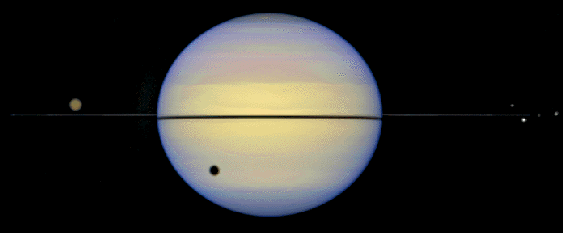
Many Moons: Titan, Mimas, Tethys, Janus, and Enceladus.
Credit: Erich Karkoschka (University of Arizona Lunar & Planetary Lab) and NASA
but the moons are weirdly different
JANUS is two moons in orbit round each other.
Titan
5150 km diameter, larger than earth's moon, has yellow atmosphere (CH4, NH3), Surface invisible
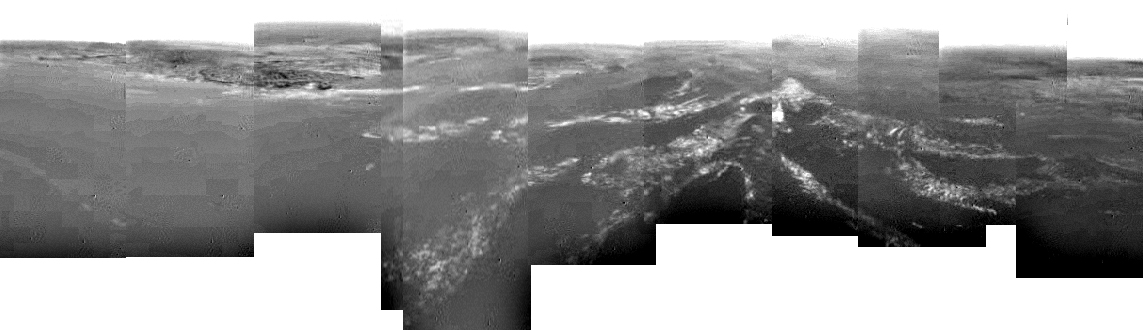
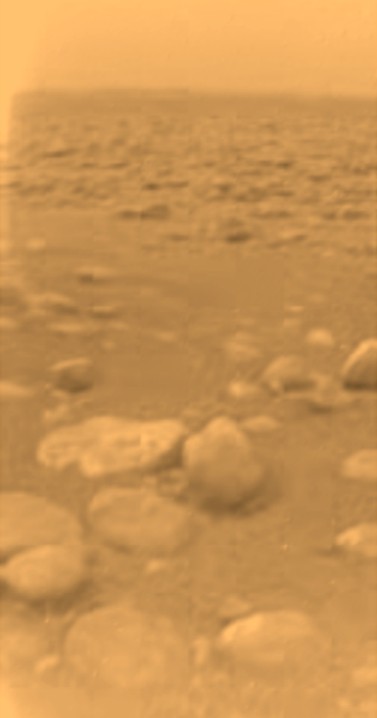
Touchdown 14 January 2005, The white streaks seen near this boundary could be ground 'fog' of methane or ethane vapour, as they were not immediately visible from higher altitudes. Wind speed at 6-7 m/s.
Credits: ESA/NASA/JPL/University of Arizona
Touch down at 4.5 m/s, the saucer-shaped probe penetrated 15 cm. Surface consistency of wet sand or clay.
Titan Landscape
Credit: ESA, NASA, Descent Imager/Spectral Radiometer Team (LPL)
Hyperion
Density about 1/2 water (!) suggests spongy texture!
Credit: Cassini Imaging Team, SSI, JPL, ESA, NASA
Iapetus
Half of moon is covered in material as black as coal
Enceladus
Giant striped snowball?
Hot (well actually very cold!) off the Press
A new ring, much larger (15 million km in radius)
very dark & faint, seen only in IR. Slanted with respect to usual rings, Phoebe is embedded in it. Could this be associated with Iapetus?
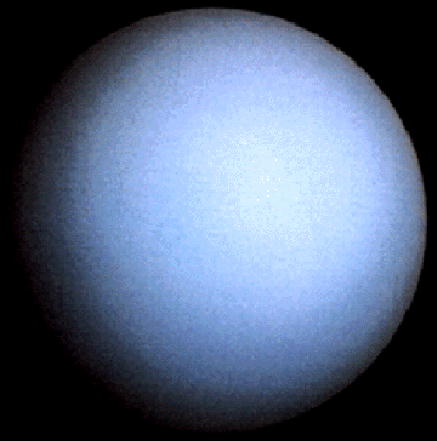
Uranus
Pale green.
Uranus rotates on side.
Note no bands, deep clear atmosphere.
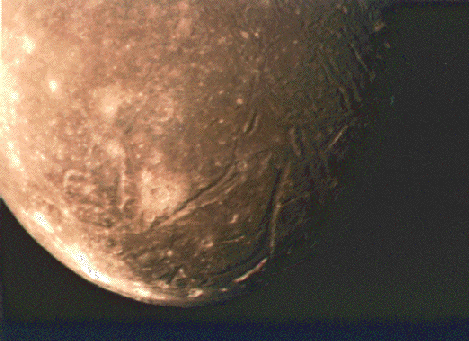
5 major moons: Ariel, Miranda, Titania, Oberon, and Umbriel.
Ariel from a distance of 170,000 kilometers.
Miranda from 42,000 kilometers.
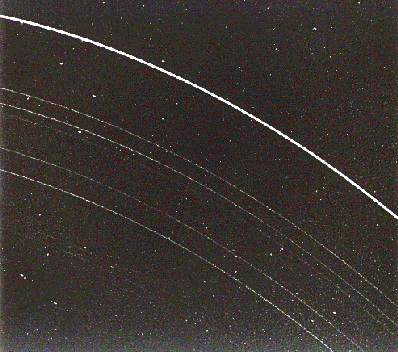
Ring system, probably 9 narrow dark rings (seen by occulting star)
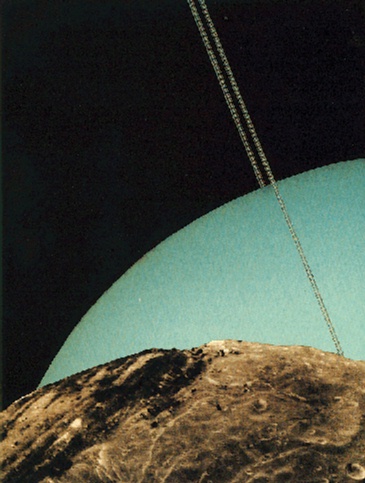
THis is how it might look from Ariel
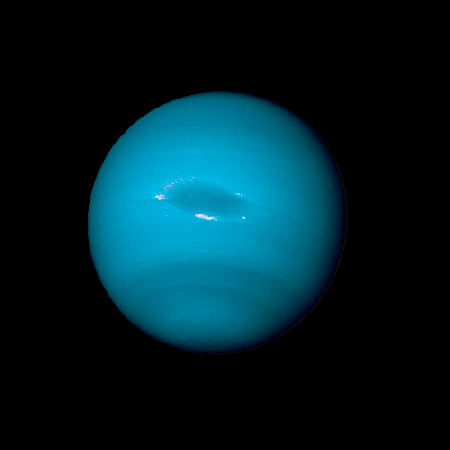
Neptune
Pale blue-green Large dark spot
1 major moon, Triton has an atmosphere, and a retrograde orbit (captured asteroid?). Other smaller moons. Appearance similar to outer moons of Jupiter:
i.e. ice-covered rock.
Pluto
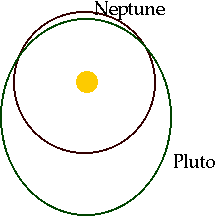
Pluto Originally found in a search for 9th planet, based on prediction due to the perturbations of Neptune's orbit. Sometimes closer than Neptune (till 1999!)
>
Seen to be double planet: Pluto-Charon
Asteroids
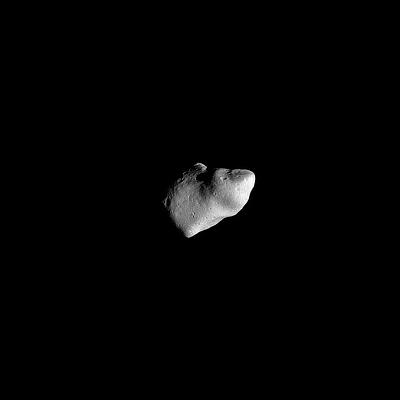
Planetoids that mainly lie in belt between Jupiter & Mars
Ceres (∼ 900 km radius) larger than rest
Total mass << Mercury
Paths of the
earth (green),
Mars (red square)
Jupiter (yellow)
twelve brightest asteroids
Most asteroid orbits lie in plane of solar system, a few are very tilted. Most lie between Mars and Jupiter, maybe more beyond Jupiter (Centaur asteroids). two Centaur Asteroids (outer Chiron and 1991DA). Orbits clearly imply that they were never part of a single object which exploded
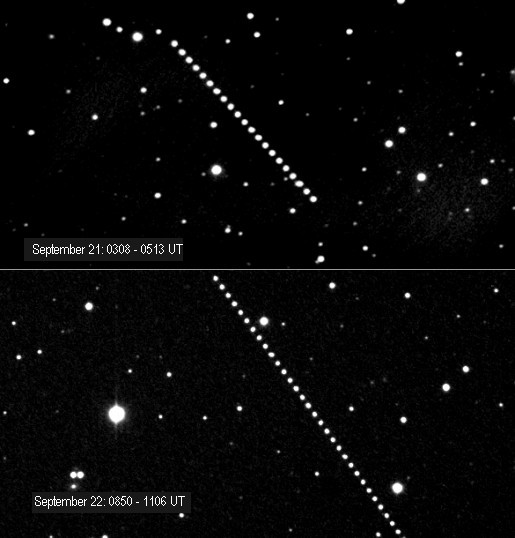
the fourth object (after the Moon, Mars and Venus) in the Universe! (but a bit too hard!)
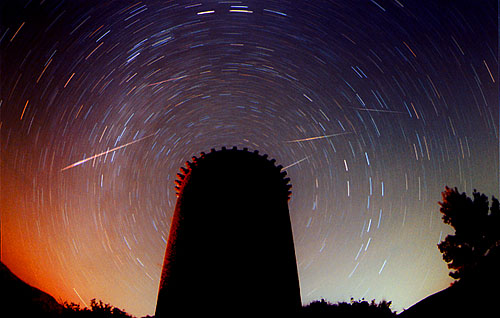
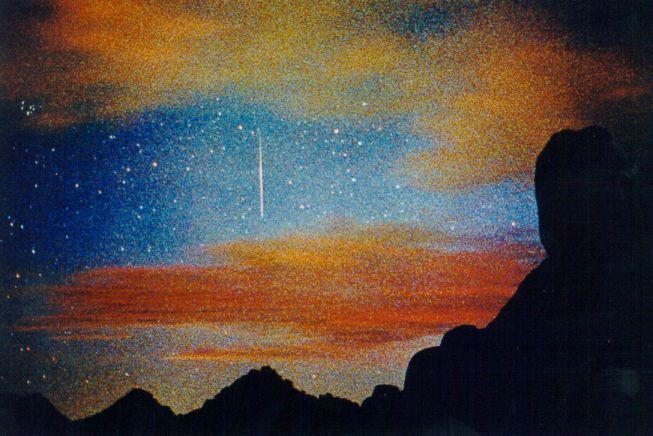
Meteors:
These are the Leonids
and here is one at sunrise
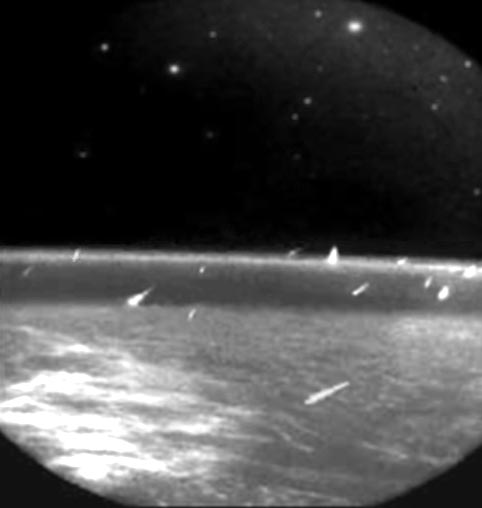
Can now see meteorites from the other side. These are Leonids seen from the space shuttle!
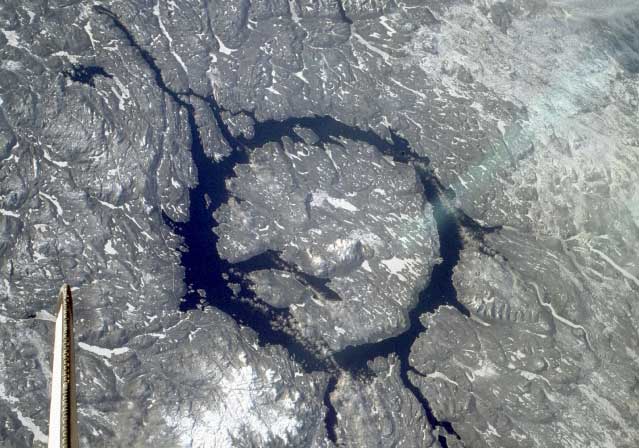
Meteorites are larger objects that his the ground. We see signs of this on almost every object in the solar system.
e.g Earth: this is the Manicougan crater in Northern Quebec: Note this is so large that it can only be seen well from space. ∼ 200 Million years old.
What killed the dinosaurs?
Much more important
Alan Hildebrand (GSC for a while, now Calgary) found a 65 million year old, 112 mile wide ring structure (the Chicxulub crater) still detectable under
layers of sediment of the Yucatan Peninsula region of Mexico. Crater is consistent with the
impact of an object of sufficient size (6 to 12 miles wide) to cause the global disruptions.
This must have been an asteroid. Can it happen again?
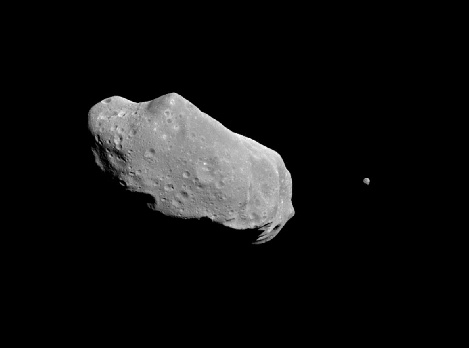
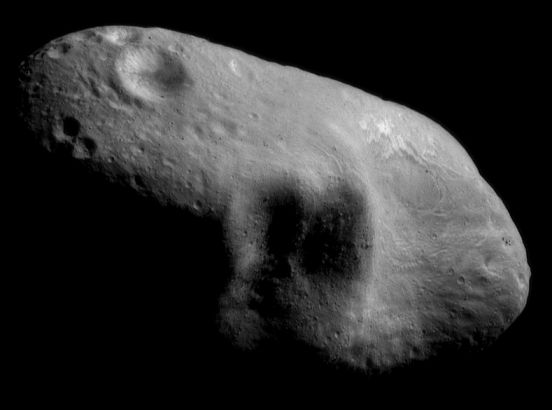
Apollo asteroids: cross earth's orbit (and may collide occasionally!)
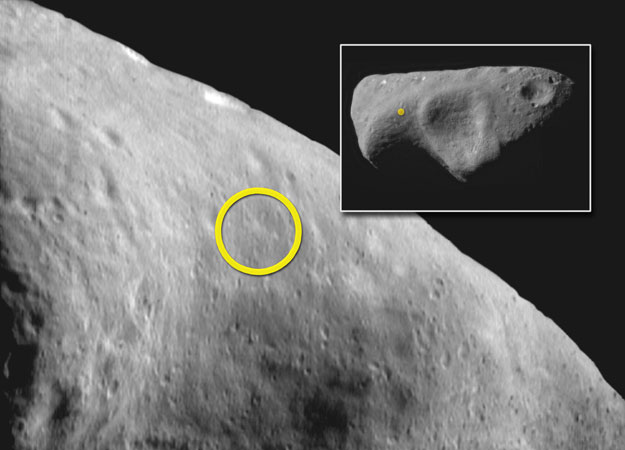
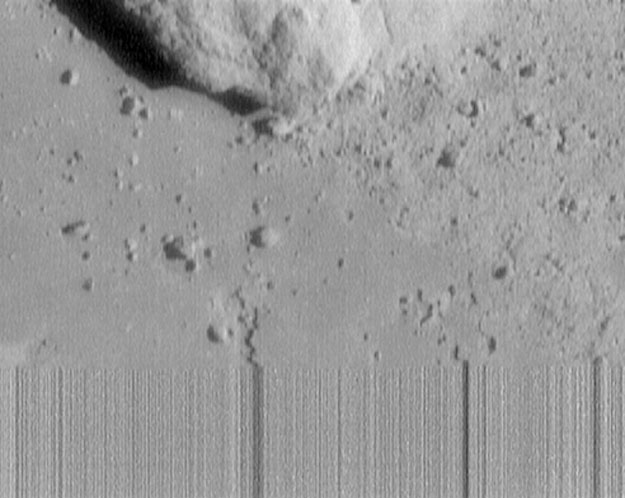
Eros used to measure Earth-Sun distance very accurately
All small < 30 km radius
Toutatis came within 1500000 km (4x distance of moon) in 2002. Was it really close? Expect major collision ~ 100000 years
(and a free cup of coffee to anyone who knows who Toutatis is!)
Comets
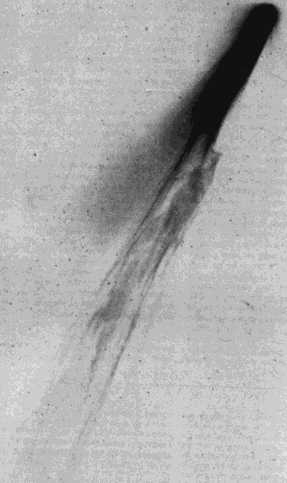
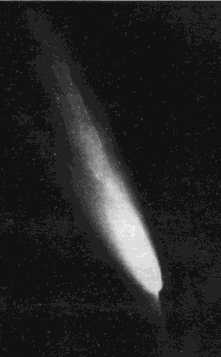
The Hairy Stars: this is Arend-Roland
Mostly very eccentric orbits, long periods, not in plane of ecliptic only visible near the sun.
"Dirty Snowballs" H2O + dust + CO2
Water boiling causes breakup? Some comets observed to have jets, which can alter orbits
Low mass, cannot retain gas (this is Mrkos)
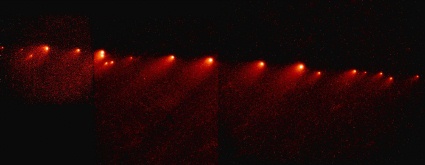
Breakup need not be just material being blown out behind: previous encounter can give rise to material in same orbit: this is Shumacher-Levy
e.g. Arend-Roland
Meteors are assumed to originate in comets which break up. e.g.
the stuff left behind by
Swift-Tuttle annually create the
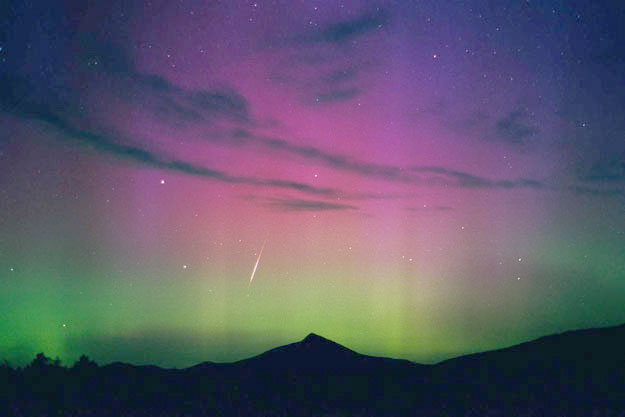
Perseids this is particularly bright every 33 years (tho. less so now). Perseid meteor in an aurora:
Credit <& Copyright:
Jimmy Westlake,
Colorado Mountain College)
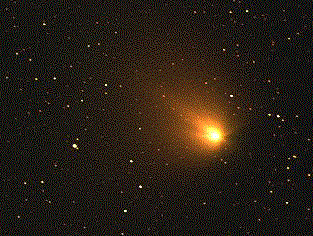
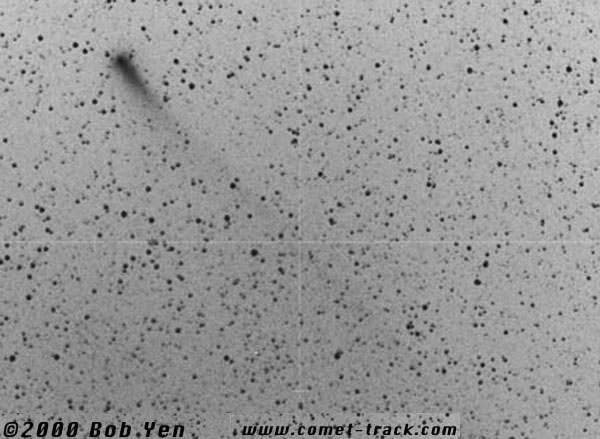
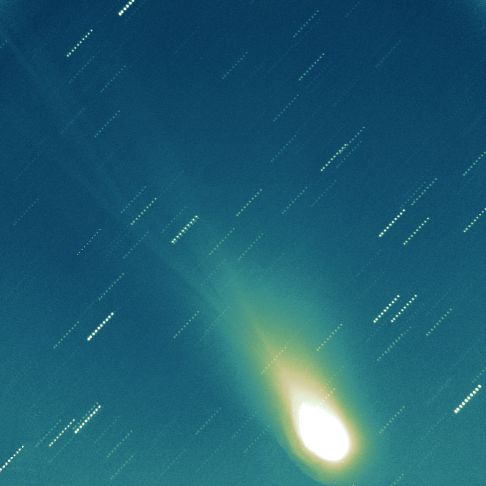
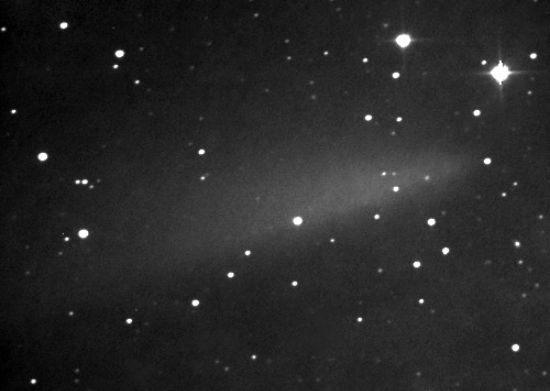
This is comet LINEAR,
which was going to be quite spectacular
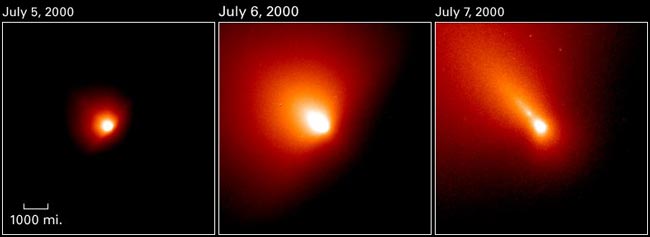
However it didn't work out that way!
Then it shattered into pieces!
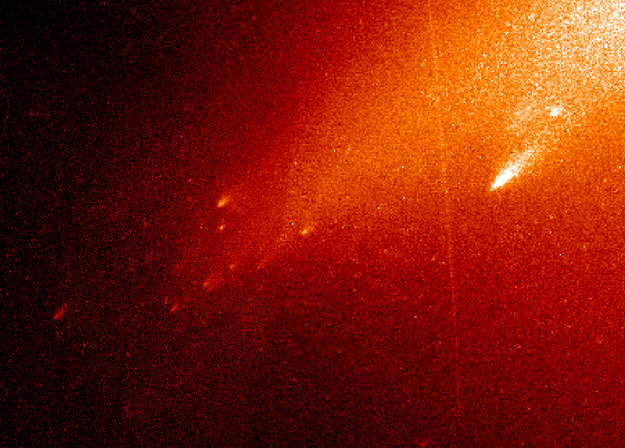
and more pieces
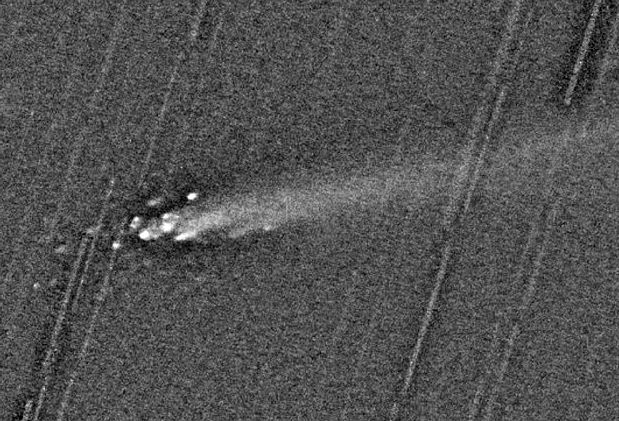
and finally it has just evaporated!
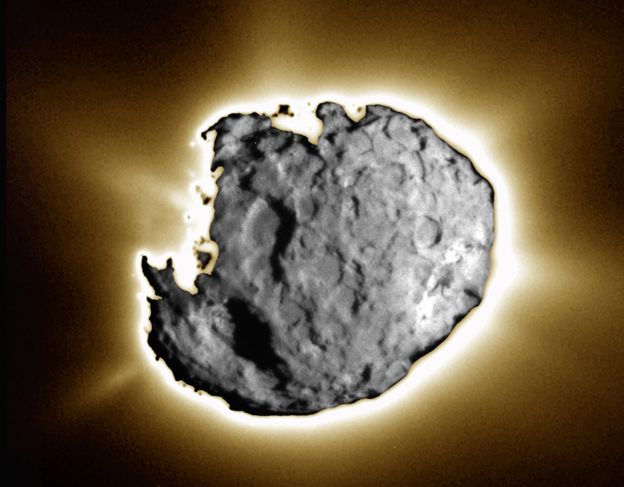
Best close-up of a comet is of Wild: note the "outgassing". Diam is about 5 km
Going Wild
Credit: Stardust Team, JPL, NASA
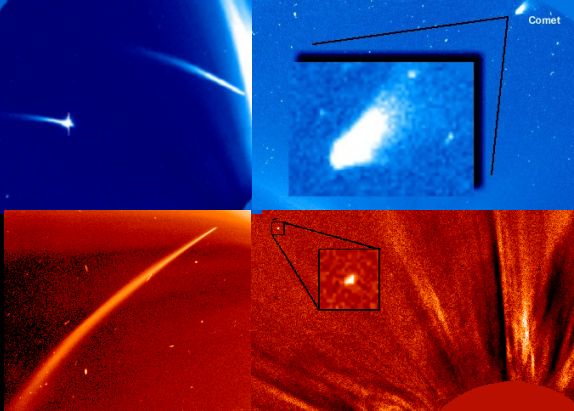
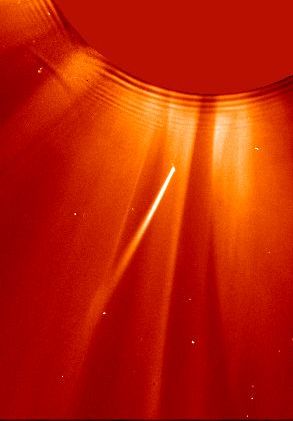
Other comets have different problems. Many start off with a very small velocity, so they fall almost directly towards the sun. The SOlar and Heliospheric Observatory (SOHO) has found 102 new comets.
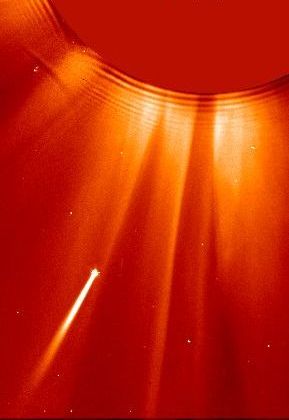
Most of the comets discovered with SOHO are "sungrazers". With the heat and tidal forces, they aren't going to survive their close passage.
and here is another one that isn't going to make it!
Where do comets come from?
Most have very long periods: Great Comet of 1858 had period of over 100000 years, very few have many repeats, (Halley's comet at 76 years and ∼30 repeats is an exception)
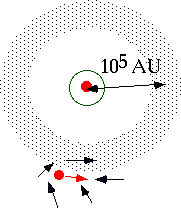
Oort cloud 105 A.U. from sun
Perturbations by passing stars can start comets falling towards sun.
No angular momentum, so must start from rest.
(Parenthetical question: why are all comets about the same size: core of 10 km or so? Don't know!)
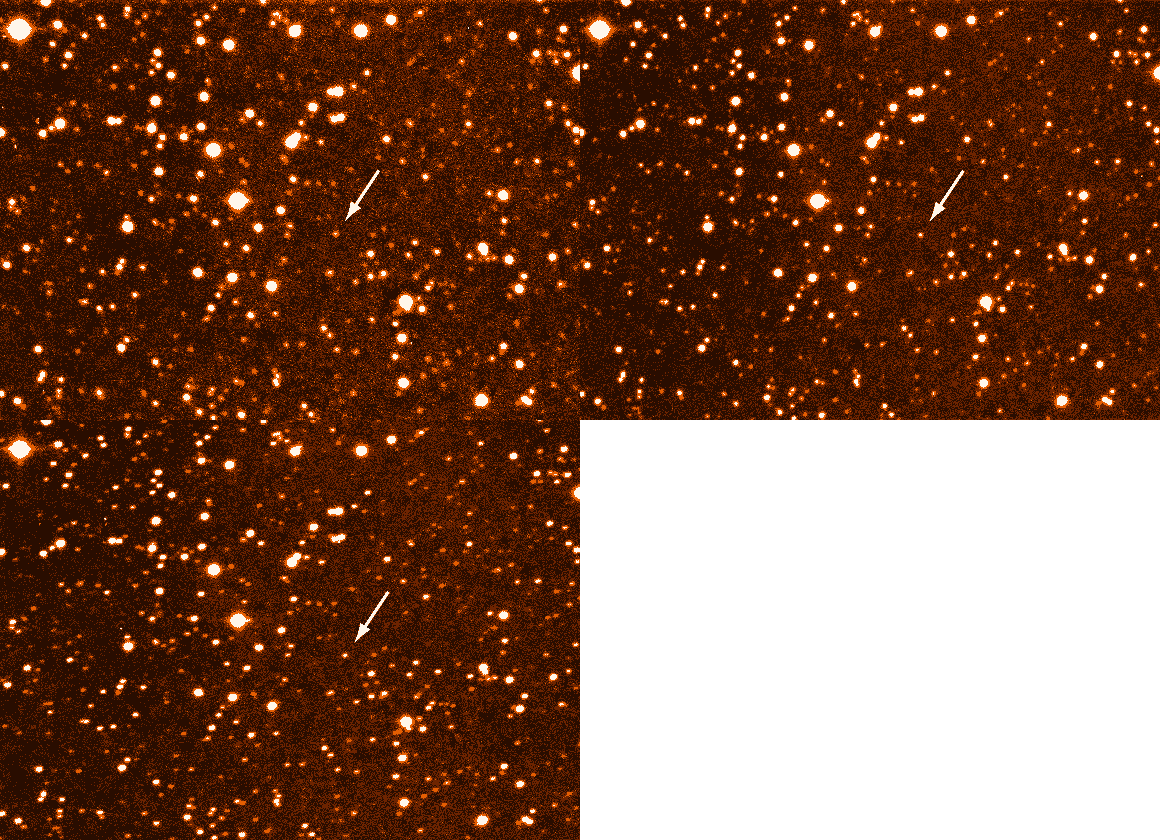
Quaoar is (almost) the most distant known object in the solar system
Sedna
Finally the most distant solar-system object we have seen:
Sedna is almost at its closest; 10,000-year orbit takes it into the Oort cloud. Probably not a planet in the usual sense.
What exactly is a planet? (Sedna and Quaoar are "objects")
No easy answer: conventionally we take original 8 as planets, and say everything else is not (i.e. Pluto isn't).
Cosmogony: Origins of the Solar System
So where did the solar system come from....?
Executive Summary of Observations
Age ∼ 4.5 x 10⁹ years
All planets lie in almost the same plane, and directions of rotation are same(except Venus).
Spin of sun lies in ecliptic, all planets (except Uranus) close to it.
Orbit shapes are nearly circular (little eccentricity)
System repeated as
Sun => Planets and Asteroids,
Planet => Moons and Rings
Comets and meteors have very eccentric orbits, at random angles ("inclinations")to the ecliptic.
Most of mass the of solar system is in the sun. Most of the angular momentum of the solar system in the planets.
Inner planets are terrestrial, outer planets are gas giants (jovian).
Inner planets are closely spaced, outer planets are widely spaced.
The old theories:
Close encounter of a star with the sun pulls out a tongue of material
Companion star explodes, material captured by sun condenses into planets
Both dynamically impossible. No angular momentum!
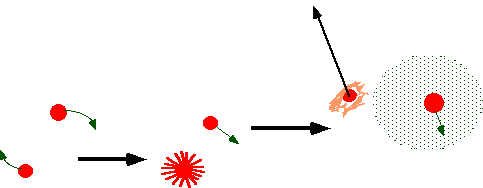
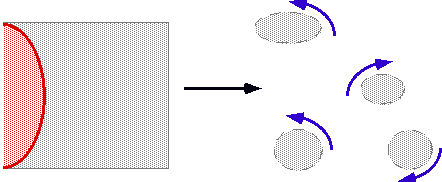
Nebular Hypothesis. A rotating gas cloud, probably compressed by a nearby supernova shock wave, starts to collapse.
The central part collapses to the sun.
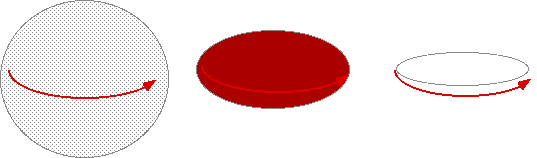
Conservation of angular momentum causes the outer part to speed up.
The outer planets condense first.
Gas and dust particles moving at an angle to ecliptic are more likely to interact and hence collapse into the plane normal to the rotation axis.
Majority rule (less effective at the limits, hence Mercury & Pluto orbit further out of the plane.)
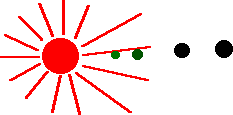
Intense solar winds remove hydrogen and helium from the inner part of the solar system.
Terrestrial planets form from the left over refractory materials.
The orbits are circularized by collisions and tidal effects.
Ideas partly confirmed by the other planetary systems that we see now:
e.g. υ (say Upsilon) Andromeda
Where is Upsilon Andromedae?
Credit and Copyright: Till Credner & Sven Kohle
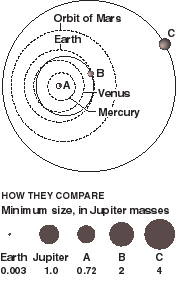
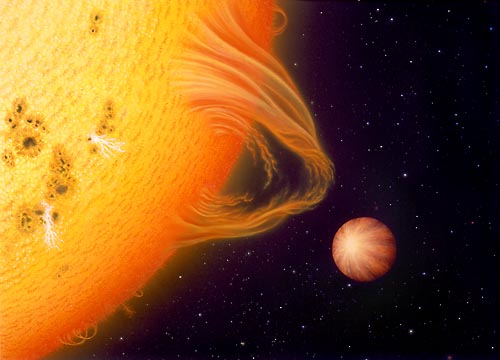
has 3 planets, one very close
(New York Times)
so it might look like this
Drawing Credit & Copyright: Lynette Cook
Total planets discovered:329
Total planetary systems: 150
(as of today!). Special conditions required for the discoveries (can only see large planets, fairly close and orbit must lie close to our line of sight) suggest they are very common: probably 50% of stars have them.
The only part of the solar system we haven't looked at is the Sun










 Titan Landscape