Strategies for Technology Enhanced Learning (TEL) and Distance Education
Kuwait University 15.12.98
Peter Watson:
http://www.physics.carleton.ca/~watson/
What is Carleton?
mid-sized North-American university
- 15000 FTE students
- large part-time population
- financial pressures means that many students have PT job
- many take more than 4 years to finish
- Income is approx $10000/student, ~ 2/3 that of comparable universities in the US
- Very large class in 1st year (~1100 students in Physics)
History: three strands
ITV:
Carleton has a long history of Instructional Television. 15 years ago, only 15 channels on cable in Ottawa, 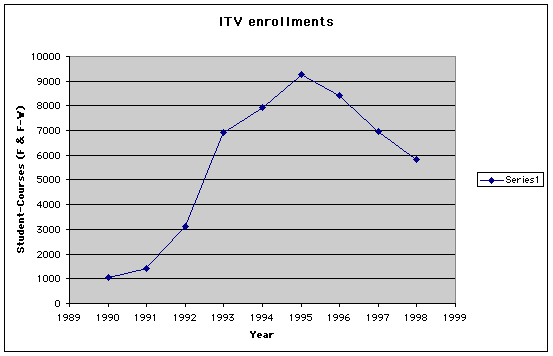
- Low costs (~ $500/hour vs $200000 for Open University)
- Low production values: most lectures are just recordings of live lectures
- Student satisfaction (surprisingly) high
- Pass rates comparable with live lectures
- Danger of getting pushed off analog channels: now ~ 80 (including pay-TV)
- 1978 to 1994 (Feb) = Channel 15
- 1994 (Feb) to 1996 (Mar) = Channel 53
- 1996 (Mar) to present = Channel 65
- Lack of interactivity
CHAT
Email program developed in 1990.
- All students have accounts
- All courses have newsgroups, can be monitored by prof. or TA
- Allows (e.g) assignments to be posted, and changes to be given very quickly
- Majority are not used seriously
Computer-Assisted Learning
- "Not Invented Here" Syndrome
- "Bolt-on" Effect: CAL is added to a conventional course without realising it is a fundamentally different medium.
- "Lone Ranger" Effect: no-one talks to anyone else.
- Universal Panacea (it isn't)
- Money Saver (forget it!)
- Technological Limitations
- Machines too slow
- Software too inflexible (and platform dependent)
- Networking too slow, particularly for home delivery of graphics intensive material
- But: there is considerable evidence that well-designed CAL significantly helps the learning process
Present
Institutional
Made a serious attempt to look at what we are doing and what we should be doing
Teaching in the Electronic World Final Report
30th January 1998 http://www.carleton.ca/~jmiller/tew/report.html
Starting Points:
Teaching and learning will see major changes over the next few years.
- We must use human resources more effectively.
- We face pressure from governments and taxpayers to see changes in the present
system.
- We must enhance the learning experience. e.g.
-
Email
- Electronic discussion groups
- Online testing
- Multimedia presentations
- Computer simulations and animation
- We must reach students who do not fit into the traditional 2-semester, 9-5
workday, on-campus mold.e.g.
-
one or more jobs
- family obligations
- distance from campus
- professional in-career training
- We will face a rapidly increasing worldwide competition in post-secondary
education. e.g.
-
Athabasca University
- B.C. Open Learning Agency
- University of Waterloo
- Telelearning NCE, coordinated from Simon Fraser University.
- Stanford University
- Syracuse University
- Western Governors' University
- University of Phoenix (the first commercial university)
I. Organizational Issues We should:
- Make technology-enhanced learning (TEL) part of the mandate of the Dean of Students. In particular, we should
- Centralize planning and resourcing for TEL
- Create Associate Dean of Students to coordinate TEL
- Establish a new policy committee with budgetary resources to support new initiatives.
- Support activities of the Teaching, Learning and Technology Roundtable (see Steve Gilbert, AAHEGESIT)
- Invest in our technological infrastructure to support teaching and learning.
- Actively seek out new sources of funding for the development of technology-delivered
courses.
II. Delivery Mechanisms.: We need to
- Provide a structure for selecting courses and programs for itv and Internet-based delivery. Criteria: interested Faculty members (absolutely essential), and at least some of:
- Large enrollment (e.g. Psych 100 has 2800 students)
- Media-rich (e.g Astronomy, Natural History, architecture)
- Quantitative Evaluation (e.g. Most science, engineering)
- Uniqueness (e.g. Technology in Ancient Civilization)
- Immediacy (e.g. Java programming)
- Produce itv courses with a view to appropriate reuse and
easy updating.
- Integrate itv with other interactive technologies where
appropriate.
- Select and develop suitable courses for offering entirely over the Internet
(note Queen's, among others, is already doing this)
III. Faculty Issues. We need to:
- Provide support for the development of new courses using technology via
- teaching release
- incremental funding
- formal recognition
- technical support
- opportunities to experiment with new teaching technologies.
- opportunities for faculty to share ideas
- Clarify issues of
-
workload
- rights
- royalties
IV. Administrative.To accommodate flexible learning we need to adapt
- administrative policies
- academic regulations
V. Marketing and Partnerships. We need to
- Promote itv and Internet-based course offerings to new
markets
- Link new modes of course delivery to our strategic strengths
- Seek out partnerships with other institutions and businesses
What are we trying to do, and how can we use the Web to do it better?
To improve on conventional teaching methods, we would provide a number of facilities. Not all of these techniques are required in every area, but the ingredients should include:
- Information: how can the information be provided.
- Lectures
- Text with equations:
- Images
- Passive animation
- 2-way communication
- Learning Assistance: we need to help students understand the subject by learning on their own:
- Note taking/annotation
- Interactive animation and graphics
- Tutorials.
- Walkthroughs: step-by-step solutions of problems.
- Collaboration.
- TA support
- Testing Material: how can the student be tested on what has been learned.
- Assignments.
- Tests, essays and exams.
- Just-in-time Testing (JITT)
- Course Management:
- Course Information
- Student record-keeping
- Security and Authentication
The future
In most of these cases, software and/or hardware solutions exist: do not develop them from scratch.
Technological Limitations
- Machines too slow: PowerMac or Pentium quite adequate
- Software too inflexible (and platform dependent): Netscape with plugins, Java run on almost any machine.
- Networking too slow, particularly for home delivery of graphics: Etherloop: Nortel/Bell Emergis will install 1 Mb/s modems into 70000 Ottawa homes: would allow full-motion video with 2-way communications over regular phone lines. Trial by Fall 1999.
- Information: how can the information be provided.
- Lectures: can be delivered
- Synchronously (via multicasting techniques such as Mbone)
- asynchronously (via, e.g., embedding video clips in Web pages)
- Text with equations: Standard HTML but equations must be embedded as GIF files. XML (Extensible Markup Language) may fix this.
- Images: GIF, JPEG, PNG files
- Passive animation: QuickTime, animated GIF, e.g. Tim Paterson
- 2-way communication Email, Video-conferencing, Etherloop
- Learning Assistance: we need to help students understand the subject by learning on their own:
- Note taking/annotation: Word-processor running in parallel
- Interactive animation and graphics: subject dependent
- For graphs in Mathematics: MathView
- For animations in engineering or Physics, Interactive Physics
- For Chemistry, CHIME
- For everything: many special purpose ones written in Java
- Tutorials. Made interactive via
- Javascript, runs on client
- CGI, runs on server
- Walkthroughs: step-by-step solutions of problems.
- Collaboration.Built into Lotus Notes, Netscape Conference can be used
- TA support On-line via Email, video-conferencing
- Testing Material: how can the student be tested on what has been learned.
- Assignments On-line randomized tests
- Can be written in Java, runs on client and uses server for database
- Can be written in CGI, runs on server
- Contained in (e.g.) Smartclass from IBM, WebCT
- Tests, essays and exams.On-line submission via Email with attachments, TAO (text analysis object) allows analysis of free-form written answers.
- Just-in-time Testing (JITT) Can embed tests in other material
- Course Management:
- Course Information Requires well-designed Web-site. Templates available
- Student record-keeping Contained in (e.g.) Smartclass from IBM, WebCT
- Security and Authentication
What is new:
- At Carleton,~30 courses make serious use of Web. Some examples to look at:
- In 1997, 6 Virtual Universities.
In 1998, > 600 Virtual Universities
(IBM Palisades meeting): jury is out on whether any will succeed. e.g. the Western Governor's University has 17 (!) students
- Internet II/Ca*Net II: high-speed link (155 Mb/s) to universities and research institutions across
North America will be in place by Xmas. Will allow any university to offer courses available to students at any other
- Digital Library Project
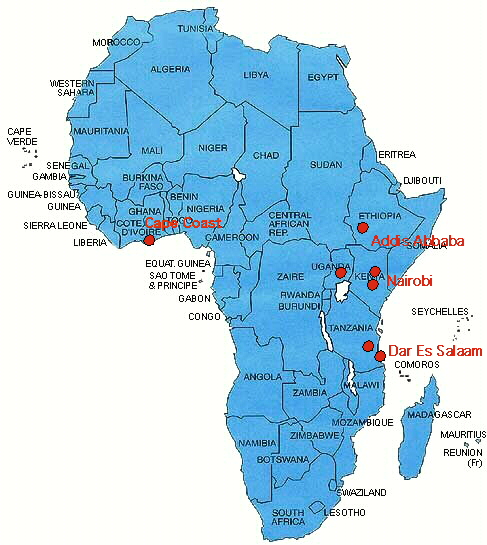
- African Virtual University (sponsored by World Bank): itv broadcasts and
live tutorials in 1st year Physics and Chemistry to 7 universities in Africa
The Future of Universities: 3 views
- They have been around (in the West) for 700 yrs. Anything that has worked for this long must be a success, hence we should not change anything for ephemeral technologies.
- Knowledge is a commodity. Universities had a monopoly, but if it can be provided cheaper and better by technology, universities will go the way of the dinosaurs. Inevitably, this means the rapid internationalization of higher education.
- Reality lies in between. Universities must adapt or die: must use technologies where appropriate, but at all cost avoid the dehumanization of education
.